Principales Frameworks de React en 2026: Una Guía Basada en Datos para Desarrolladores
 Katarina Harbuzava14 min de lectura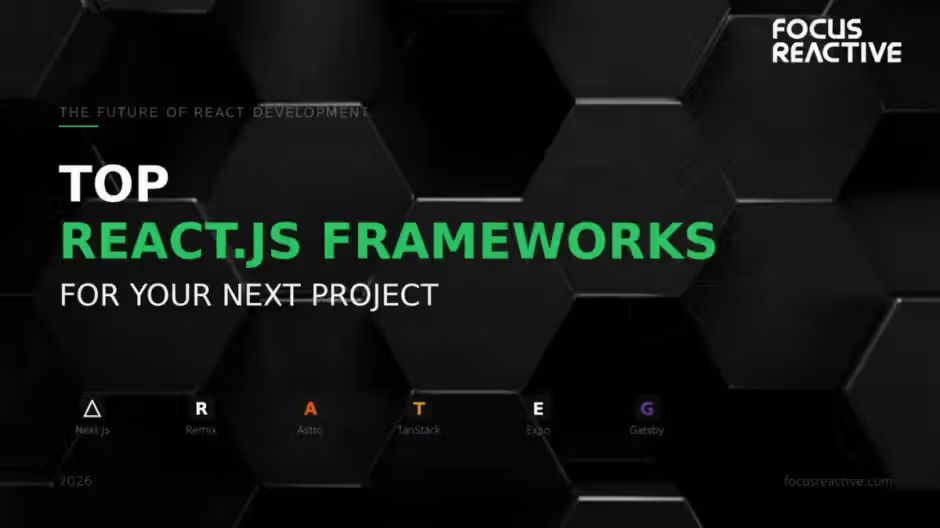
Todos conocemos y amamos Reactjs y sus frameworks por su poderosa capacidad para potenciar tareas de frontend y facilitar la construcción de interfaces de usuario interactivas, especialmente para aplicaciones web complejas.
React es la biblioteca de frontend más utilizada en el mundo, elegida por el 82% de los desarrolladores de JavaScript en la encuesta State of JS 2024, y por el 39.5% de todos los desarrolladores en la encuesta de Desarrolladores de Stack Overflow 2024.
Pero React puro es una biblioteca de UI, no una solución completa. El enrutamiento, la renderización del lado del servidor, la obtención de datos y el despliegue son responsabilidad del desarrollador, y esa es precisamente la brecha que llenan los frameworks de React.js.
Esta guía corta el ruido con datos concretos: conteos de estrellas de GitHub, cifras de descargas semanales de npm, resultados de encuestas de State of JS 2024 y 2025, discursos de desarrolladores en Reddit y tendencias de contenido en YouTube. Ya sea que usted sea un líder técnico evaluando frameworks de Reactjs para un nuevo proyecto o un desarrollador tratando de entender qué herramientas están realmente en producción, este desglose le proporciona la señal sin el bombo.
¿Qué es React y por qué los desarrolladores lo eligen?
React es una biblioteca de JavaScript creada por Meta para construir interfaces de usuario. Su idea central es simple: dividir la UI en pequeños componentes componibles, cada uno gestionando su propio estado. Cuando los datos cambian, React actualiza solo las partes de la página que necesitan cambiar, no todo el documento, utilizando un algoritmo de diferenciación de DOM virtual. Esto hace que incluso las interfaces complejas y con muchos datos sean rápidas y predecibles.
Los desarrolladores eligen React por varias razones concretas:
- Reutilización de componentes.Una vez que se construye un botón, formulario o modal como un componente de React, se puede insertar en cualquier parte de una aplicación o compartir entre proyectos por completo. Los equipos ahorran un tiempo significativo en cada característica subsiguiente.
- Flujo de datos unidireccional.Los datos fluyen de los componentes padre a los componentes hijo, lo que facilita el seguimiento y la depuración del estado de la aplicación. Esta arquitectura escala bien a medida que crecen las bases de código.
- El ecosistema más grande en frontend.React tiene más bibliotecas, integraciones de terceros, respuestas en Stack Overflow y tutoriales que cualquier otra biblioteca de frontend.
- React funciona en todas partes.El mismo modelo mental cubre web (React DOM), móvil (React Native), escritorio (Electron + React), 3D (React Three Fiber) e incluso AR/VR (React 360).
- Las herramientas de IA predeterminan a React.Como señaló State of JS 2025, el dominio del código de React en la web significa que las herramientas de codificación de IA generan código de React con mayor fluidez, reforzando la adopción en la era del desarrollo asistido por IA.
- Profundidad del mercado laboral.React sigue siendo la habilidad más solicitada en las ofertas de trabajo de frontend a nivel mundial.
El uso de React ha sido notablemente estable en la cima: 82% de adopción entre los desarrolladores de JS en 2024, un aumento desde ~84% el año anterior. El framework no necesita seguir tendencias; ya alimenta el 39.5% de todos los entornos de desarrollo encuestados por Stack Overflow, incluidos aquellos fuera de roles puramente de frontend.
En la práctica, la mayoría de las aplicaciones en producción no utilizan solo React. Utilizan React más un meta-framework encima que agrega las piezas faltantes.
| React (biblioteca) | Next.js / Remix / Astro (frameworks) |
|---|---|---|
Renderiza componentes | Sí | Sí |
Maneja el enrutamiento | No | Sí |
Renderización del lado del servidor | No | Sí |
Convenciones de obtención de datos | No | Sí |
Capa de API / backend | No | Sí (Next.js, Remix) |
Herramientas de construcción y despliegue | No | Sí |
La confusión surge porque React casi siempre se utiliza con uno de estos frameworks de Reactjs, por lo que la combinación funciona como un framework. Cuando alguien dice "lo construimos en React", casi siempre quiere decir "lo construimos usando React + Next.js" o una pila similar.
Por qué los frameworks de Reactjs son importantes
React nunca fue diseñado para ser una plataforma de aplicación completa. Maneja la renderización de componentes, pero deja el enrutamiento, la obtención de datos, la renderización del lado del servidor y las herramientas de construcción al desarrollador. Esta brecha dio lugar a un rico ecosistema de meta-frameworks y herramientas complementarias, cada una con una filosofía diferente sobre cómo deberían estructurarse y entregarse las aplicaciones de React.
Para 2026, las "guerras de frameworks están efectivamente terminadas", según los editores de State of JS 2025. El desarrollador promedio ha utilizado solo 2.6 frameworks de frontend en toda su carrera — la era de saltar constantemente de un framework a otro ha quedado atrás. La verdadera competencia se ha trasladado a frameworks de reactjs y herramientas de construcción en lugar de la biblioteca base en sí.
Los Números: Estrellas de GitHub y Descargas de npm
Framework | Estrellas de GitHub | Descargas Semanales de npm | Usado por (GitHub) |
|---|---|---|---|
Next.js | 134k | ~7M | 5M+ repos |
React Native | 125k | (empaquetado) | Millones de aplicaciones |
Astro | 55.2k | ~900K | 38K+ dominios |
Expo | ~49.8k | — | 3M+ usuarios |
Remix / React Router | 32.2k | ~1.8M | 18% de adopción empresarial |
React Router (independiente) | 56.4k | ~3.8B de por vida | 11M+ repos dependientes |
Gatsby | ~55k | ~400K (en declive) | Legado |
Los 3 Frameworks de React Más Populares
1. Next.js: El Meta-Framework Dominante
Next.js es el líder indiscutible del mercado para el desarrollo de React de pila completa. Alimenta ~2.6% de toda la internet y es utilizado por casi 18,000 empresas verificadas en producción, incluyendo TikTok, Twitch, Shopify y Hulu. En 2025–2026, Next.js tiene un 67% de participación en nuevos proyectos empresariales de React.
Estadísticas clave:134k estrellas de GitHub — el meta-framework de React más estrellado por un amplio margen; ~7M descargas semanales de npm; 5M+ repositorios de GitHub dependen de él; Next.js lidera todos los meta-frameworks en uso bruto según State of JS 2024.
Lo que hace que Next.js sea la opción predeterminada:renderización híbrida (SSR, SSG, ISR y PPR en un solo framework); Componentes del Servidor de React (RSC) — primer framework en integrarlos profundamente; rutas API integradas y Acciones del Servidor para desarrollo de pila completa; Turbopack (estable en v15/v16) para construcciones locales ultra rápidas; profunda integración con la red de borde de Vercel; y un ecosistema masivo con un plugin para casi todos los CMS sin cabeza.
La advertencia de satisfacción:A pesar de su dominio, la satisfacción con Next.js ha estado disminuyendo. State of JS 2025 señala una brecha de satisfacción del 39% entre Next.js y Astro — la mayor brecha intra-categoría en la historia de la encuesta. Las frustraciones de los desarrolladores incluyen una complejidad excesiva, cambios disruptivos entre versiones principales y la pronunciada curva de aprendizaje del App Router. Los hilos de Reddit en 2026 reflejan una imagen matizada: las encuestas en X y r/nextjs muestran que más del 75% aún elige Next.js para producción, incluso a medida que crece la frustración.
2. React Native + Expo: La Potencia Móvil
Si bien no es un meta-framework web en el sentido tradicional, React Native es el segundo framework más importante en el ecosistema de React. Con 125k estrellas de GitHub y el mismo modelo de componente que React DOM, permite a los desarrolladores escribir aplicaciones nativas para iOS, Android, Windows y macOS en React. Expo se entiende mejor como el "Next.js de React Native" — un framework gestionado que abstrae la configuración nativa.
Estadísticas clave:React Native: 125k estrellas de GitHub, 425 lanzamientos, 25k bifurcaciones; Expo: ~49.8k estrellas de GitHub, más de 3 millones de usuarios en todo el mundo; React Native es la herramienta de desarrollo móvil #1 en State of JS 2024.
La comunidad se ha convergido en gran medida en Expo como el punto de partida preferido para nuevos proyectos de React Native, mientras que la CLI de React Native en estado puro sigue siendo la elección para aplicaciones de brownfield o funcionalidad nativa altamente personalizada.
3. Remix / React Router v7: El Campeón de los Estándares Web
Remix ha experimentado un cambio arquitectónico significativo. A finales de 2024, no habrá una nueva versión de Remix independiente; en su lugar, el equipo se ha fusionado completamente en React Router v7, que ahora sirve como enrutador del lado del cliente y como un framework de pila completa. React Router es uno de los paquetes de JavaScript más descargados de todos los tiempos, con 3.84 mil millones de descargas de npm y 11M+ repositorios dependientes.
Estadísticas clave:Remix/React Router v7: 32.2k estrellas en el repositorio remix-run/remix; 56.4k en react-router; ~1.8M descargas semanales; 18% de adopción empresarial; 30% más rápido TTFB en comparación con Next.js en entornos de borde; envía un 35% menos de JavaScript por defecto (371 kB frente a los 566 kB de Next.js).
Lo que hace que Remix sea diferente:modelo de cargador/acción (obtención de datos y mutaciones co-localizadas con rutas); enrutamiento anidado con carga de datos independiente por segmento; mejora progresiva; excelente para paneles de control con muchos datos; la recarga en caliente más rápida de los principales frameworks (0.3s frente a los 0.5s de Next.js).
El Contendiente en Ascenso: Astro
Astro ocupa una posición única: no es puramente un framework de React, pero admite componentes de React a través de su "arquitectura de islas" y se ha convertido en el meta-framework de más rápido crecimiento tanto en conteo de estrellas como en puntuaciones de satisfacción.
Estadísticas clave:55.2k estrellas de GitHub (aumento de 7,000 solo en 2025); las descargas de npm crecieron de 360K a 900K por semana durante 2025 (un aumento de 2.5×); #1 en satisfacción de meta-frameworks en State of JS 2025 (39 puntos porcentuales por delante de Next.js); 4to framework web más admirado en la Encuesta de Desarrolladores de Stack Overflow 2025 con un 62.2% de admiración; empresas notables que utilizan Astro incluyen Cloudflare, Google, Microsoft, Netlify, OpenAI; en enero de 2026, Cloudflare adquirió Astro.
Por qué Astro resuena con los desarrolladores:cero JavaScript enviado por defecto; agnóstico al framework (usar React, Vue, Svelte o HTML puro); tiempos de construcción 3× más rápidos que Next.js para contenido estático; las puntuaciones de Lighthouse alcanzan consistentemente 99 frente a 96 de Next.js; ideal para sitios con mucho contenido, páginas de marketing, documentación y blogs.
Desglose de Frameworks: ¿Cuál para Qué Proyecto?
Tipo de Proyecto | Framework Recomendado | Por Qué |
|---|---|---|
SaaS empresarial / aplicación B2B | Next.js | Componentes del Servidor, ISR, gran ecosistema, 67% de participación en el mercado empresarial |
eCommerce (crítico para SEO) | Next.js | combinación SSR + ISR, mejores integraciones de CMS, compatibilidad con Shopify |
Panel de control con muchos datos | Remix | Modelo de datos de cargador/acción, rutas anidadas, 30% más rápido TTFB |
Aplicación intensiva en formularios | Remix | Manejo nativo de formularios, validación del lado del servidor |
Página de marketing / de aterrizaje | Astro | Casi cero JS, 99 Lighthouse, construcciones más rápidas |
Sitio de documentación | Astro (Starlight) | Framework de documentación diseñado para este propósito, utilizado por Cloudflare, OpenAI |
Blog / plataforma de contenido | Astro o Next.js | Astro para estático; Next.js si necesita personalización dinámica |
Aplicación móvil (iOS + Android) | Expo | Flujo de trabajo gestionado, EAS Build, Expo Router |
Sitio estático / portafolio | Astro o Next.js | Astro para máximo rendimiento |
Herramienta interna / panel de administración | Remix o Next.js | Los patrones de datos de Remix brillan para aplicaciones internas con mucho CRUD |
Los Principales Criterios para Elegir un Framework de React
- Estrategia de Renderización Requerida — Estático primero (Astro), híbrido SSR + ISR (Next.js), renderizado en servidor con estándares web (Remix), móvil nativo (Expo / React Native).
- Composición del Equipo y Habilidades Existentes — Next.js tiene la curva de aprendizaje más corta; Expo reduce la fricción en comparación con la CLI de React Native en estado puro; Remix recompensa a los desarrolladores que entienden HTTP, formularios y mejora progresiva.
- Objetivos de Rendimiento — Astro: 15 KB de carga inicial, 99 Lighthouse; Next.js: 85 KB, 96; Remix: 92 KB, 94; Gatsby: 120 KB, 87.
- Alojamiento y Despliegue — Vercel (Next.js), Cloudflare (Astro después de la adquisición), en cualquier lugar (Remix), EAS (Expo).
- Madurez del Ecosistema — Next.js es el más grande por mucho; Astro es el de más rápido crecimiento; Expo es fuerte para móvil.
- Satisfacción vs. Compromiso de Longevidad — Next.js tiene el mayor uso pero una satisfacción en declive; Astro tiene la mayor satisfacción pero una menor adopción empresarial; Remix se sitúa en el medio.
Otros Frameworks que Vale la Pena Conocer
- TanStack Start — el nuevo participante de más rápido crecimiento; las descargas semanales aumentaron de 600K a 14M entre abril y junio de 2026; soporte RSC en desarrollo; mejor para SPAs y aplicaciones de pila completa seguras para tipos.
- React Router — 56.4k estrellas, 11M+ repos dependientes, 3.84 mil millones de descargas de npm de por vida; v7 se fusionó con Remix; modo de biblioteca y modo de framework ahora en el mismo paquete.
- Shopify Hydrogen — el framework oficial de React de Shopify para comercio sin cabeza, construido sobre Remix; se despliega en Oxygen; mejor para cualquier tienda Shopify sin cabeza.
- Docusaurus — generador de sitios estáticos basado en React de Meta construido para documentación; ~60k estrellas; alimenta la documentación de React, Jest, Prettier, Babel, Webpack, Supabase.
- RedwoodJS SDK — RedwoodSDK es un framework de React para Cloudflare (SSR, RSC, Funciones del Servidor); mejor para aplicaciones nativas de borde en Cloudflare Workers.
- Waku — un framework minimalista de React construido para Componentes del Servidor de React; ~5k estrellas; mejor para experimentación y aprendizaje de RSC.
- Vike — un plugin agnóstico al framework para SSR y SSG; deliberadamente no opina; mejor para requisitos personalizados de SSR.
- Blitz.js — un kit de herramientas de pila completa inspirado en Rails sobre Next.js con una capa de datos "cero-API"; 14k estrellas.
- Create T3 App — la herramienta de andamiaje de facto para aplicaciones de React de pila completa seguras para tipos (Next.js + tRPC + Prisma + NextAuth + Tailwind); 28.2k estrellas.
- Gatsby — en declive gestionado; ~55k estrellas (en gran parte legado) y ~400K descargas semanales; no recomendado para proyectos de greenfield en 2026.
Instantánea de la Encuesta: State of JS 2025
Framework | Uso (State of JS) | Retención | Clasificación de Satisfacción |
|---|---|---|---|
Next.js | #1 (dominante) | En declive | #5 entre los meta-frameworks |
Astro | #2 (de rápido crecimiento) | Muy alta | #1 (39 puntos de ventaja sobre Next.js) |
SvelteKit | #3 | Muy alta | #2 |
Remix | #4 | Moderada | #3 |
Nuxt | Fuerte | Alta | #2-3 |
Gatsby | En declive | Muy baja | Último |
Lo que Reddit y YouTube nos Dicen
Las discusiones en Reddit en r/reactjs revelan un patrón consistente: los desarrolladores que aprendieron React entre 2020 y 2023 tienden a elegir Next.js, mientras que los desarrolladores que inician nuevos proyectos entre 2024 y 2026 a menudo consideran Astro para casos de uso con mucho contenido. Un hilo frecuentemente citado resume el consenso de los desarrolladores: "Simplemente elige Vite para SPA, Next.js para SSR y sigue adelante" — indicando que la decisión del meta-framework se ha vuelto más pragmática y menos ideológica con el tiempo.
En YouTube, el contenido de framework de React más visto en 2025 confirma la misma jerarquía: los tutoriales de Next.js dominan los conteos de vistas por un orden de magnitud, los tutoriales de Expo/React Native son el contenido móvil dominante, y los tutoriales de Astro han visto la tasa de crecimiento más rápida en vistas.
La Conclusión
El panorama de frameworks de React ha madurado en una jerarquía clara con nichos distintos:
Next.js es la opción segura y completa para aplicaciones web de pila completa, especialmente cuando necesita SSR, un gran grupo de contratación y integraciones de CMS completas. Sus más de 7M de descargas semanales y un 67% de participación en el mercado empresarial lo convierten en la opción predeterminada a menos que tenga razones específicas para desviarse.
Expo (React Native) es la opción predeterminada para el desarrollo móvil. Su flujo de trabajo gestionado, la cadena de herramientas EAS y su base de usuarios de más de 3M hacen que la CLI de React Native en estado puro sea una elección de nicho para la mayoría de los nuevos proyectos.
Remix / React Router v7destaca cuando su aplicación es intensiva en mutaciones de datos, cuando la alineación con los estándares web es importante o cuando necesita la máxima portabilidad entre entornos de alojamiento.
Astrolidera en satisfacción de desarrolladores y es la mejor opción arquitectónica para sitios web centrados en contenido. Su adquisición por parte de Cloudflare a principios de 2026 le brinda respaldo a nivel empresarial.
La decisión más importante es hacer coincidir las fortalezas centrales del framework con el caso de uso dominante de su proyecto, una elección que, como confirma State of JS 2025, la mayoría de los desarrolladores experimentados hacen una vez y rara vez revisitan.
Los equipos que necesitan una empresa de desarrollo de React para implementar cualquiera de estos frameworks deben priorizar agencias con experiencia en producción en la pila específica, porque un especialista en Next.js y una tienda de Expo resuelven problemas fundamentalmente diferentes. El socio adecuado es aquel que ha logrado enviar con éxito en ese entorno antes.
Preguntas Frecuentes Sobre Frameworks de React.js
Sí. React tiene una tasa de uso del 82% entre los desarrolladores de JS, y ha permanecido estable durante años. Retadores como Solid y Svelte tienen una mayor satisfacción, pero siguen por debajo del 30% en uso. State of JS 2025 concluyó que React ha ganado en el ámbito empresarial, el mercado laboral y el ecosistema de herramientas de IA.
Next.js es el framework de React.js más popular, con 134k estrellas de GitHub, ~7M descargas semanales de npm y un 67% de participación en nuevos proyectos empresariales de React. Es el framework que el equipo de React recomienda oficialmente para producción.
React es una biblioteca de JavaScript, no un framework. Solo maneja la capa de vista renderizando componentes y gestionando el estado de la UI. No incluye enrutamiento, renderización del lado del servidor ni obtención de datos. Los frameworks de Reactjs como Next.js, Remix y Astro están construidos sobre React para agregar esas capas faltantes.
Los desarrolladores eligen React por su ecosistema inigualable, modelo de componente reutilizable y alcance multiplataforma (web, móvil a través de React Native, escritorio). Tiene más bibliotecas, integraciones y tutoriales que cualquier otra opción de frontend, el mercado laboral más profundo y herramientas de IA que generan código de React con mayor fluidez que cualquier alternativa, reforzando la adopción en flujos de trabajo asistidos por IA.
React es una biblioteca de renderización de UI. Next.js es un framework de pila completa construido sobre React que agrega SSR, SSG, enrutamiento basado en archivos, rutas API y optimización de imágenes. Cada aplicación de Next.js es una aplicación de React, pero no cada aplicación de React utiliza Next.js. Next.js es React con la infraestructura de producción ya integrada.
Elija su opción según lo que necesite crear:
- Aplicación web de pila completa o SaaS:Next.js — 67% predeterminado empresarial, ecosistema más amplio
- Sitio de contenido, blog o documentación:Astro — cero JS por defecto, puntuación de Lighthouse 99
- Panel de control con muchos datos:Remix / React Router v7 — mejores patrones de carga de datos
- Aplicación móvil (iOS + Android):Expo — React Native gestionado, 3M+ usuarios
- Tienda Shopify sin cabeza:Hydrogen — el framework oficial de React de Shopify
React se integra con backends de tres maneras. Primero, como una SPA desacoplada: el frontend de React obtiene datos de cualquier backend (Express, Django, Laravel, Rails) a través de APIs REST o GraphQL — el enfoque más portátil. Segundo, a través de un meta-framework de React: las Acciones del Servidor de Next.js y los cargadores de Remix le permiten escribir lógica de backend dentro del proyecto de React mismo, eliminando un servidor separado. Tercero, a través de una BFF (Backend para Frontend) donde un servidor Node.js (NestJS, Fastify) agrega APIs y alimenta datos a Next.js o Remix — común en microservicios empresariales. Para la mayoría de los nuevos proyectos, Next.js o Remix manejan completamente el backend.
Next.js y Astro son los mejores frameworks de reactjs para SEO. Next.js ofrece SSR e ISR con herramientas de metaetiquetas maduras, lo que lo convierte en el estándar para sitios de comercio electrónico y marketing. Astro produce una puntuación de Lighthouse de 99 y paquetes de JavaScript casi nulos por defecto, el mejor rendimiento bruto de cualquier framework compatible con React. Ambos entregan HTML pre-renderizado a los rastreadores.
Expo es un framework construido sobre React Native, de la misma manera que Next.js está construido sobre React. Agrega un pipeline de construcción gestionado (EAS), un SDK de API de dispositivo (cámara, ubicación, notificaciones) y enrutamiento basado en archivos a través de Expo Router. Para la mayoría de los nuevos proyectos de React Native, Expo es el punto de partida recomendado sobre la CLI de React Native en estado puro.